Production · 6 min read
Why executive interviews fall flat
The most common corporate video format is also the most commonly ruined, almost always by the same three decisions taken before anyone sits down.
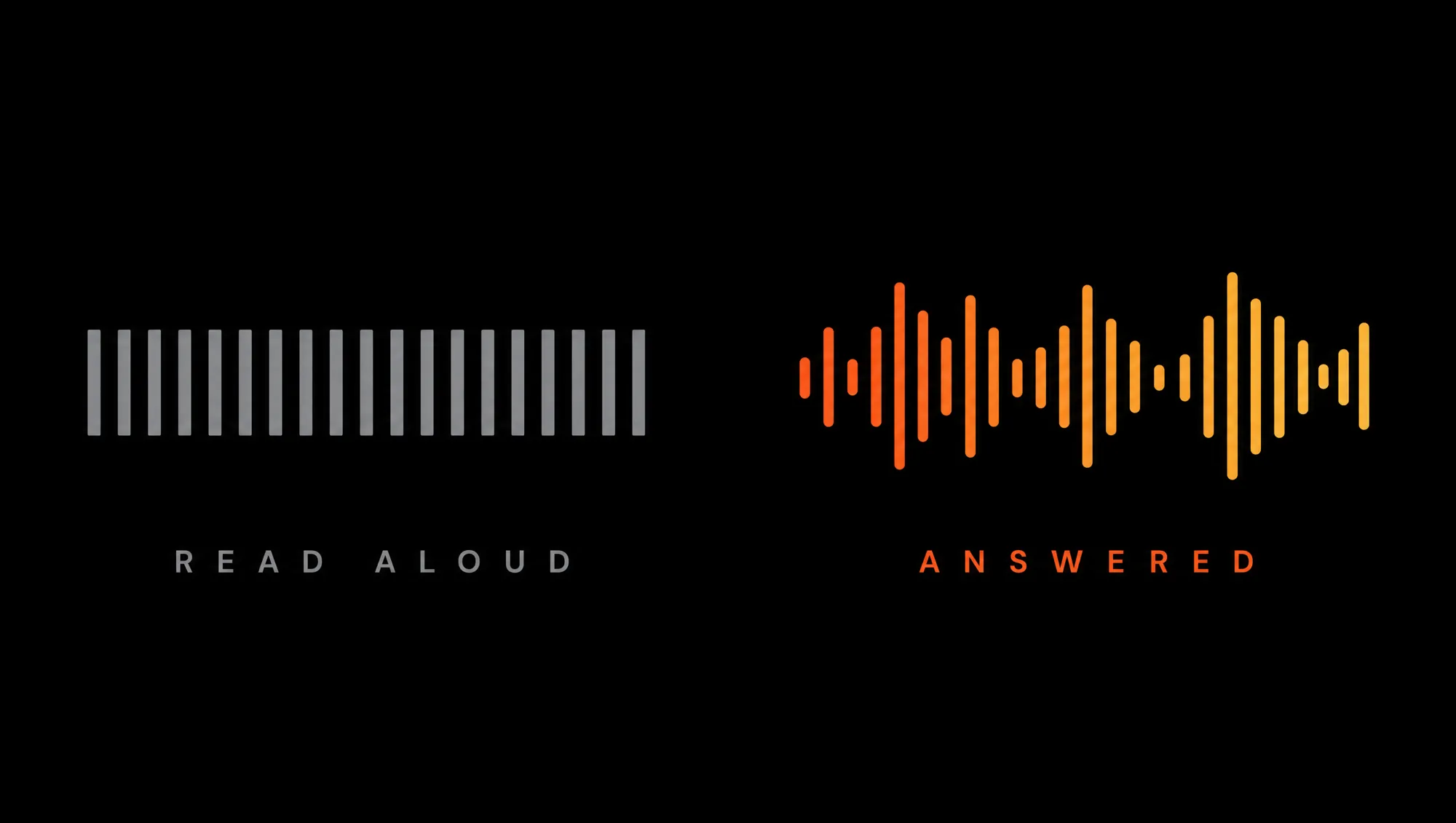
The executive interview is the most commissioned format in corporate video and the most reliably disappointing. The footage is competent, the person is senior and credible, and the result is unwatchable.
It is almost never the fault of the person on camera. It is three decisions taken before they sat down.
The script
Someone writes what the executive should say, the executive learns it, and then delivers it.
This fails for a mechanical reason: reading and speaking use different parts of the brain and produce visibly different behaviour. Recited speech has an even rhythm, lands its emphasis in slightly the wrong places, and comes with a particular fixed quality around the eyes. Almost nobody can articulate what is wrong, and almost everybody can tell.
The irony is that the script usually exists to protect a message that the executive already knows perfectly well. They have given that answer in meetings for years. Written down and returned to them as lines, it becomes something they have to perform rather than something they know.
The fix is to interview rather than record. Provide the questions in advance, not the answers. Ask, listen, and ask again. The second answer is usually the usable one, because the first is the version they think they are supposed to give.
The setting
The second failure is the boardroom.
It is chosen because it is available and looks appropriately serious. It is usually a hard-walled room with a glass table, overhead fluorescent light, and an air-conditioning unit nobody notices until it is on the recording. It makes people sound distant and look tired, and it signals internal communications to anyone watching.
A room does not need to be interesting. It needs to be quiet, and to have one direction of soft light. A meeting room with a carpet and a window is usually better than the boardroom, and the office nobody uses is often better still.
The question nobody asked
The third failure is subtler and does the most damage: nobody established what the interview is for.
An interview commissioned as “a piece about the strategy” produces general statements, because that is what a general question deserves. An interview commissioned to answer the three objections our sales team hears most produces something a salesperson can send to a prospect on Tuesday.
Same executive, same hour, same crew. Entirely different asset, decided by the brief — which is the same reason being right is no longer enough on its own.
What good ones have in common
The executive interviews that work tend to share four things.
A specific question with a specific audience. Not “tell us about the year” but “what would you say to a client worried about the transition?”
Permission to be uncertain. The most credible moments are usually where someone concedes a difficulty. These are also the first thing removed in review, which is why so many interviews end up saying nothing. The same review reflex is why brand social underperforms.
Enough time to warm up. The first ten minutes are rarely usable. Scheduling twenty minutes produces ten minutes of throat-clearing and a rushed ending.
A second camera or a plan for cutaways. Without one, every edit is either a jump cut or a long unbroken take. This is a scheduling decision, not a budget one.
What to change on the next one
Three things, none of which cost anything:
- Send questions, not a script, and say plainly that they will be asked rather than recited.
- Choose the room for acoustics rather than status. Carpet, soft furnishings, one window.
- Write down who the answer is for and what you want them to do next before booking the crew.
The third does more than the other two combined, and it is the one that gets skipped, because it is the only one that requires a decision rather than an arrangement.