Events · 7 min read
Getting more than a recap out of an event
A shoot day costs the same whether you leave with one film or twenty assets. What varies is how the coverage was designed.
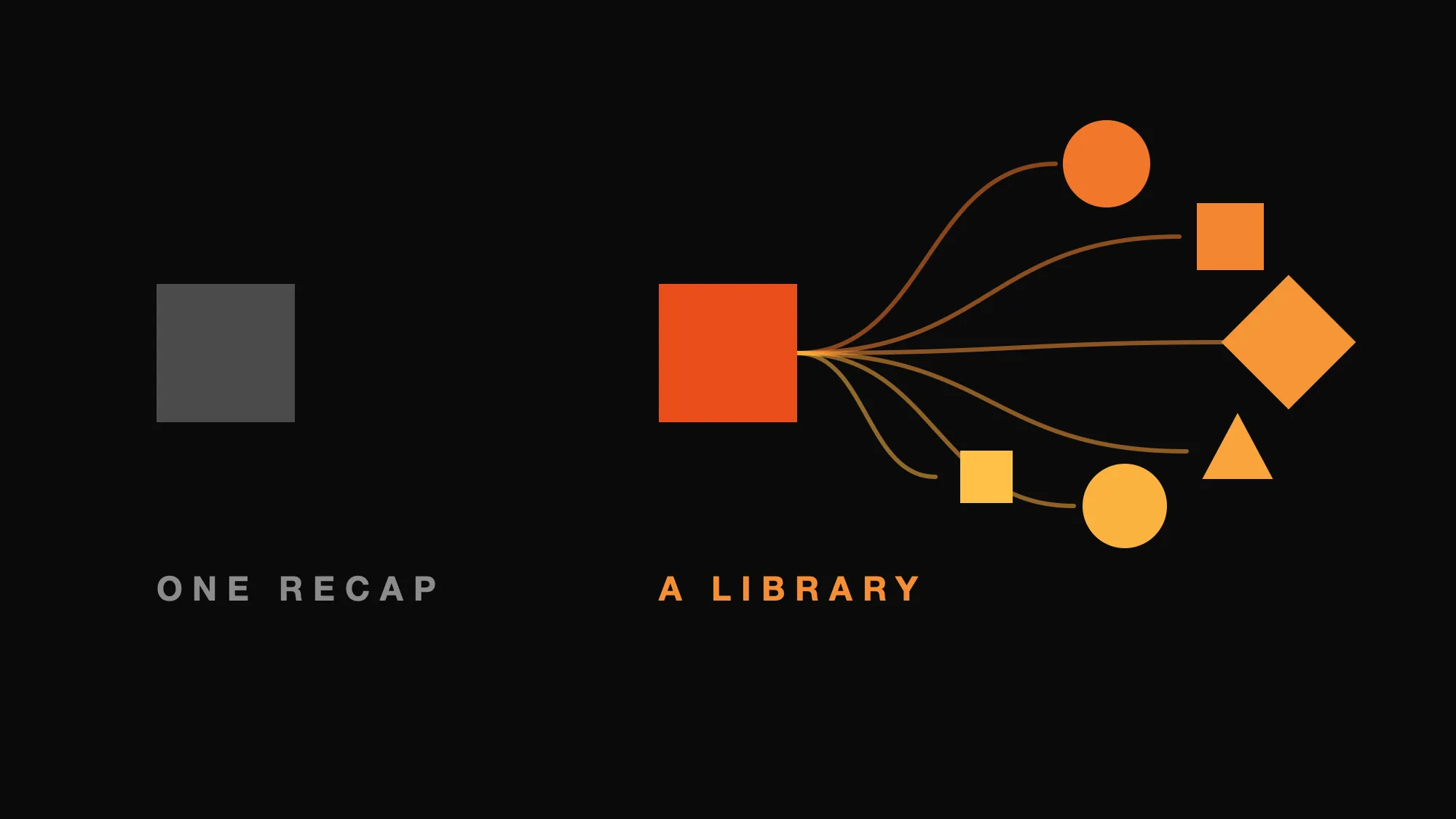
An event happens once. The room is dressed once, the speakers are in it once, and the people worth filming are in the same place for a few hours and then never again in that combination.
The cost of covering it is largely fixed. Crew, equipment, travel, scheduling and access cost what they cost whether the team leaves with a single recap film or with material that keeps working for a year. What varies is how much was taken away, and that is settled by decisions made well before anyone arrives.
Why the recap became the default
Most event coverage is commissioned as one deliverable, usually a two or three minute film summarising the day.
It is an understandable brief. It is easy to specify, easy to approve, and it produces something recognisable at the end. It also matches how the budget is usually held: the event has a line, the film is part of it, and the film is what the line buys.
The difficulty is that a recap is close to the least useful thing an event can produce. Its audience is mostly people who were already there. It dates immediately, because it is explicitly about a moment that has passed. And it answers no question that anyone outside the organisation was asking.
None of that makes it wrong to produce. It makes it a strange thing to produce only.
The fixed cost nobody accounts for
Consider what has already been paid for by the time a crew is on site.
The venue is dressed. The audience is assembled. Senior people who are ordinarily difficult to schedule are in one building with time between sessions. Partners, clients and speakers are all present and generally willing. A camera team is already there, already lit, already set up.
That combination is expensive to create and it exists for a few hours. Filming a recap uses perhaps a fraction of it. Everything else is available at close to no marginal cost, and almost all of it is gone by the evening.
The expensive part of production is rarely the shooting. It is assembling the conditions in which shooting is possible — and an event assembles them for you.
What else the same day can produce
With no additional shoot time and a different plan, the same hours generally yield:
- Interviews with people who are otherwise unreachable. Fifteen minutes with a senior executive between sessions is a proposition they will accept on the day and decline for the next six months. Ask rather than script, and fifteen minutes is enough.
- Short-form cutdowns, cut vertically from the outset rather than cropped from a landscape edit afterwards.
- Speaker and session content, which usually has a longer useful life than the event film, because it is about a subject rather than an occasion.
- A photography library covering the room, the people and the detail — the images that otherwise get requested repeatedly for the next twelve months. This is markedly cheaper when stills and video sit in one brief.
- Partner and sponsor material, which frequently has commercial value of its own.
None of that requires a longer day. It requires knowing in advance that it is wanted, because a crew planning for one film will shoot for one film.
What determines the difference
Three things, all decided before the event.
Being told what happens afterwards. A team that knows the material will be cut vertically will frame with room for it. A team told only about a recap will not, and no crop recovers it afterwards.
Interview slots in the schedule. Interviews on an event day are almost always secured by having asked in advance. Attempting to grab them on the day produces a short queue of people politely explaining that they are needed elsewhere.
Enough crew to be in two places. The main stage and the side room usually matter to different audiences. One camera has to choose. This is what planning event coverage around the afterwards means in practice.
Each of these costs comparatively little arranged early, and cannot be bought at all once the event is under way.
What this means for the following year
The compounding effect is what makes this worth attention.
An organisation running the same event annually and commissioning a recap each time owns a series of unconnected films, each dated, none reusable. One that commissions coverage as a system rather than a sequence of projects builds a library: a growing bank of speaker material, interviews, photography and short-form, all consistent because the same team shot it against the same intent.
By the third year the difference is not stylistic. One organisation has three films it no longer uses. The other has three years of material still in circulation, and the marginal cost of the next year’s coverage keeps falling, because so much of the groundwork already exists.
The question worth asking
Before the next event, one question is worth more than any brief:
What would we like to still be using from this day in eighteen months?
Answer that honestly and the coverage plan follows. Leave it unasked and the answer is usually a film that stopped being watched a fortnight after it went out, produced from a day that could have supplied a great deal more.